Lessons and Carols, Door to Door: A Chauffeur’s Guide to Britain’s Winter Service Season
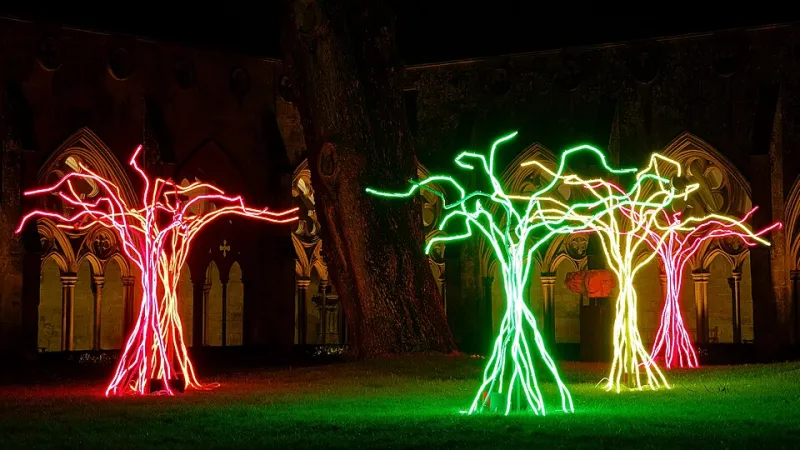
Photo: Peter Trimming , CC BY-SA 2.0, via Wikimedia Commons
There is a particular kind of British winter evening that begins with a cold churchyard and ends with a warm car. In between sit candlelight, a choir, familiar words and the quiet satisfaction of having arrived without circling a cathedral close for twenty minutes. Carol services are among the most atmospheric events in the national calendar, but they are also among the least forgiving for the disorganised. Precincts fill early, parking is scarce, weather is unpredictable and the difference between a memorable evening and a frazzled one is often decided before the first note is sung.
The Service Begins at the Kerb
A carol service is not simply a performance. It is a sequence of small logistical moments: the drop-off at a lychgate, the walk across wet stone, the search for a pew, the standing and sitting, the collection plate, the exit into the dark. A chauffeur-led approach treats each of these as part of the occasion rather than an inconvenience around it. The aim is not to remove the atmosphere of a cold winter night, but to ensure that the cold is something you experience by choice, in a coat, with a warm car waiting at an agreed point afterwards.
This matters most at the great cathedrals. Services at St Paul’s, Westminster Abbey, York Minster, Salisbury, Wells, Hereford and Truro draw congregations far beyond their parishes, and the surrounding streets are rarely designed for modern volumes of traffic. A chauffeur who knows the approved drop-off points, the pedestrian closures and the likely queue at the end of the service is worth considerably more than a satnav. The best arrangements include a named meeting point, a mobile number and a contingency for a service that runs longer than expected. The exit from a popular carol service can be as crowded as the entrance, and a car positioned too close to the main doors will simply be stuck in the throng.
The Cathedral Standard
London offers the most concentrated choice, from the Festival of Nine Lessons and Carols at St Paul’s to the quieter services in the City churches. Westminster Abbey’s services are magnificent but demand patience and early arrival; the surrounding streets are best treated as a drop-off zone rather than a parking opportunity. A sensible plan places the car at a discreet distance and allows fifteen minutes on foot, with umbrellas in the boot and a spare wrap in the cabin.
The provincial cathedrals often provide the more relaxed evening. Salisbury, with its broad close, is a fine example of a service that can be approached calmly if the arrival is timed properly. York Minster rewards an early drop at the Minster Yard side and a later collection from a quieter street. Wells, small enough to feel intimate, can become congested around the market square. Here the chauffeur’s local knowledge is not a luxury but a practical necessity.
College Chapels and the Ticket Question
The college chapels of Oxford, Cambridge and Durham sit at the heart of the British carol tradition. King’s College, Cambridge, is the most famous, and its Christmas Eve service is famously oversubscribed. For those fortunate enough to hold tickets, the evening requires precise planning: the college precinct is pedestrian, the streets around it are narrow, and the cold walk from a sensibly parked car is part of the ritual. A chauffeur can wait within easy reach, avoiding the scramble for taxis after the final hymn.
Other college chapels are more accessible and often more rewarding for the traveller who values atmosphere over broadcast fame. Magdalen College, Oxford, and Durham Cathedral’s surrounding college chapels offer services of real quality with less of the crush. The ticket question is central: many services are free but require early arrival, while others are ticketed and strictly timed. A chauffeur itinerary should be built around the ticket, not the other way around. If the service begins at seven, the car should be at the kerb by half past six, with coats, programmes and a folded umbrella ready.
Country Houses and the Long Drive Home
Beyond the cathedrals and chapels, some of the most charming carol services take place in country houses. Chatsworth, Blenheim, Castle Howard and Waddesdon Manor all host seasonal gatherings, often with mulled wine, lanterns and a walk through floodlit gardens. These are evenings that begin in a dark parkland and end with a long drive through unlit lanes. A chauffeur removes the least pleasant part of the experience: the cold, the concentration and the worry about a deer on the road at ten o’clock.
Country-house services also tend to be more informal in timing, which makes a fixed return time unwise. The best arrangement is a chauffeur on call within a defined window, ready to be summoned by message when the last mince pie has been eaten. This is not indulgence for its own sake. It is the difference between enjoying a second glass of mulled wine and calculating how long it takes to warm the car.
The Practical Details That Make the Evening
Winter carol services have a few consistent requirements. Dress warmly, but not so warmly that the car becomes unbearable; a chauffeur can adjust the cabin temperature to suit. Carry a small umbrella and wear shoes that cope with wet cobbles. Allow more time than seems necessary for the walk from car to pew. And decide the post-service plan in advance. A supper reservation at a nearby hotel or a quiet pub is often the most civilised way to end the evening, giving the congregation time to disperse and the car time to reach the door.
For those travelling some distance, an overnight stay turns a cold evening into a proper weekend. Salisbury, York, Oxford and Bath all offer hotels within easy reach of their carol services, and a chauffeur can handle the luggage and the morning departure as easily as the evening arrival. The return journey, with the heating on and the radio low, is part of the pleasure.
A Composed Arrival
A carol service is a small ceremony of arrival and departure as much as a religious occasion. The candlelight, the choir and the familiar words matter, but so does the manner in which the evening is framed. A warm car at the lychgate, a driver who knows the precinct, a supper table held for a late finish: these are the quiet details that allow the occasion to be what it should be. In a British winter, composure is not a luxury. It is the whole point of the journey.