A Calmer Advent: Bruges, Ghent and Lille by Chauffeur from Kent
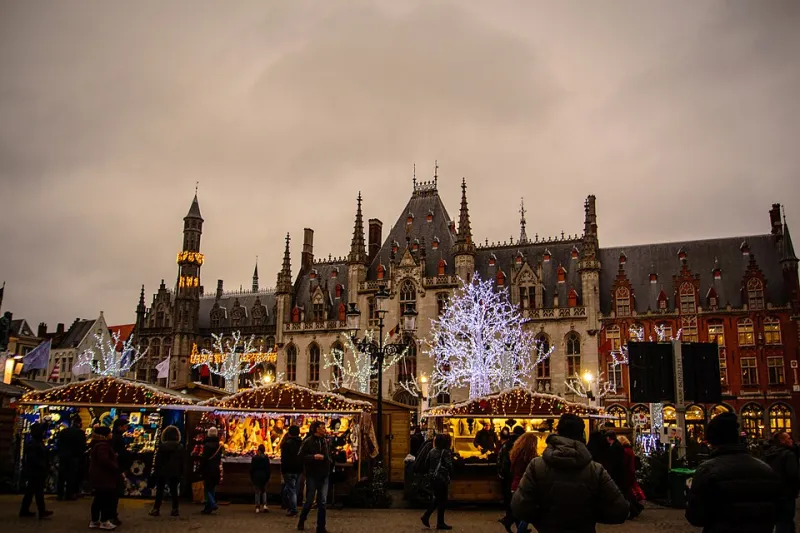
Photo: Arthurious, CC BY 4.0, via Wikimedia Commons
December in Britain has acquired a familiar choreography: the park-and-ride queue, the wet walk from the station, the crush around the mulled-wine stall and the late drive home through fog. The Christmas market is a pleasing idea that often becomes an endurance test. There is another way, and it begins not with a ferry timetable but with a car collecting you from your door.
A two-day chauffeured circuit through Bruges, Ghent and Lille is not an extravagance for its own sake. It is a practical response to a practical problem. The Channel crossing is short, the road network on the other side is generous, and the historic centres reward travellers who arrive without the burden of parking, luggage and a designated driver negotiating unfamiliar cobbles after dark.
The Case for Crossing Rather Than Circling
British Christmas markets have their charms, but they are increasingly victims of their own success. Birmingham's Frankfurt market, Manchester's Albert Square and the honeyed streets of Bath all demand patience before they offer pleasure. Trains are crowded, car parks fill early, and the weather has a habit of turning a gentle browse into a tactical retreat.
Across the Channel, the same festive rituals — wooden chalets, lights strung between gables, the scent of cinnamon and hot wine — are staged in towns that were built for pedestrians. Bruges, Ghent and Lille are compact, beautiful and easily linked by road. The difference is not the market itself. It is the manner of arrival.
With Worldwide Chauffeur Drive, the journey is planned as a single continuous service rather than a series of separate transactions. The car collects from home in Kent or London, carries the luggage, waits through the crossing and delivers you to the hotel door. There is no shuttle bus, no suitcase wheeled across wet paving, no debate about who is driving back from the terminal.
The Route at a Glance
The sensible shape is two days, with one overnight stop. Day one begins early: a collection in Kent, a short run to the Eurotunnel Le Shuttle terminal at Folkestone, and the thirty-five-minute crossing to Calais. From Calais, the autoroute carries you to Bruges in a little over an hour. The car drops at the hotel, luggage is taken in, and the afternoon is free.
Bruges in December is at its most photogenic. The Markt and Simon Stevinplein host the principal market activity, while the quieter lanes towards the Begijnhof offer respite from the crowds. A late lunch, an hour of shopping, and an early evening among the lights are ample. The chauffeur remains on call for the return to the hotel, however short the distance.
Day two turns east and south. Ghent is roughly forty minutes from Bruges, and its Christmas market around Sint-Pietersplein is a more local affair than Bruges's postcard set-piece. After a morning there, the car continues to Lille — about an hour — for the market at Place Rihour and a late lunch in the old town. The return to Calais is straightforward, and the evening crossing delivers you home before the late-night driving begins to feel like a chore.
Le Shuttle, Borders and the Boring Things That Matter
None of this works without attention to the unglamorous detail. Le Shuttle check-in is best allowed sixty to ninety minutes, particularly on December weekends. The driver manages the ticket and the vehicle formalities; passengers remain in the car for the crossing, which keeps luggage secure and the party together.
Border formalities are light but not invisible. Travellers should confirm current Schengen entry requirements before booking, including passport validity and any authorisation scheme in force at the time. The chauffeur company should confirm vehicle documentation, insurance and breakdown cover. These are not matters to leave to chance, nor to assume that a familiar route from previous years remains unchanged.
Customs allowances apply on the return, and the boot should not become an impromptu wine cellar without thought for the rules. A good chauffeur will know the limits and will not encourage a casual approach. The pleasure of the weekend depends on the boring things being handled quietly in the background.
Cobbles, Drop-Offs and the Final Hundred Metres
The historic centres of Bruges, Ghent and Lille are largely pedestrian, and rightly so. A chauffeur cannot — and should not — attempt to thread a car through the Markt or the narrow lanes around Place Rihour. The skill lies in the drop-off: a permitted bay, a hotel forecourt, a discreet corner within a short walk of the market.
This is where local knowledge earns its keep. A good operator will share a meeting point, a pin and a mobile number, and will adjust if the weather turns. Sensible shoes are not a failure of style; they are a recognition that cobbles and December rain are old friends. Luggage stays in the car until the hotel is ready, and umbrellas live in the door pockets rather than the boot.
Glühwein and the Return Leg
There is a particular pleasure in drinking a glass of glühwein knowing that someone else is driving. The chauffeur abstains, of course, and keeps the cabin at a civilised temperature while the passengers thaw. Water is provided, the route home is planned, and the return crossing is booked for a time that suits the party rather than the cheapest fare.
The alternative — a late-night drive from a British market, or a crowded train with shopping bags — is precisely what this circuit is designed to avoid. The back seat is not a taxi rank, but it is a very good place to be at the end of a cold day.
Planning for December 2026
December weekends sell out early, both on Le Shuttle and in the better hotels in Bruges and Lille. Midweek departures are calmer and often better value. Market dates should be confirmed directly, as they vary by town and year. A two-day itinerary is enough for a first visit; a third day allows Ghent to be seen properly rather than in passing.
The Channel is not a barrier to a chauffeured weekend. It is simply a stretch of water that a well-planned car crosses in thirty-five minutes. The real luxury is not the vehicle itself, but the absence of friction — the sense that the weekend has been assembled, rather than improvised, from the moment the car arrives at your door.